Back
Back
Google Knowledge Panel for Executives
How senior leaders can turn a simple Google search of their name into a strategic trust asset for investors, regulators, media, and key hires.
Dec 15, 2025
As an executive, you spend a lot of time thinking about reputation. Investor confidence, talent attraction, regulator comfort, internal morale. Most of that feels very offline and relational. Calls, meetings, board decks, press briefings.
The paradox is that an increasing share of your reputation is now mediated through one tiny interaction that almost nobody talks about. The moment someone types your name into Google.
A board candidate, a journalist, a key hire you want to convince, a regulator who hears your name in a briefing, a family office that gets your deck from a trusted banker. They all end up in the same place. A simple name search. What appears in that moment either reinforces everything you have built, or it quietly undermines it.
What Google currently sees when it looks at you
If you search your own name right now, you will probably see some combination of:
Old conference bios
Scattered interviews
A corporate profile that has not been updated in two years
Outdated news stories from a previous role
Third party directory pages that may or may not be accurate
For most executives, the first page of results feels like a time capsule that nobody is really in charge of. Pieces of your past and present stitched together by algorithms, not by intent.
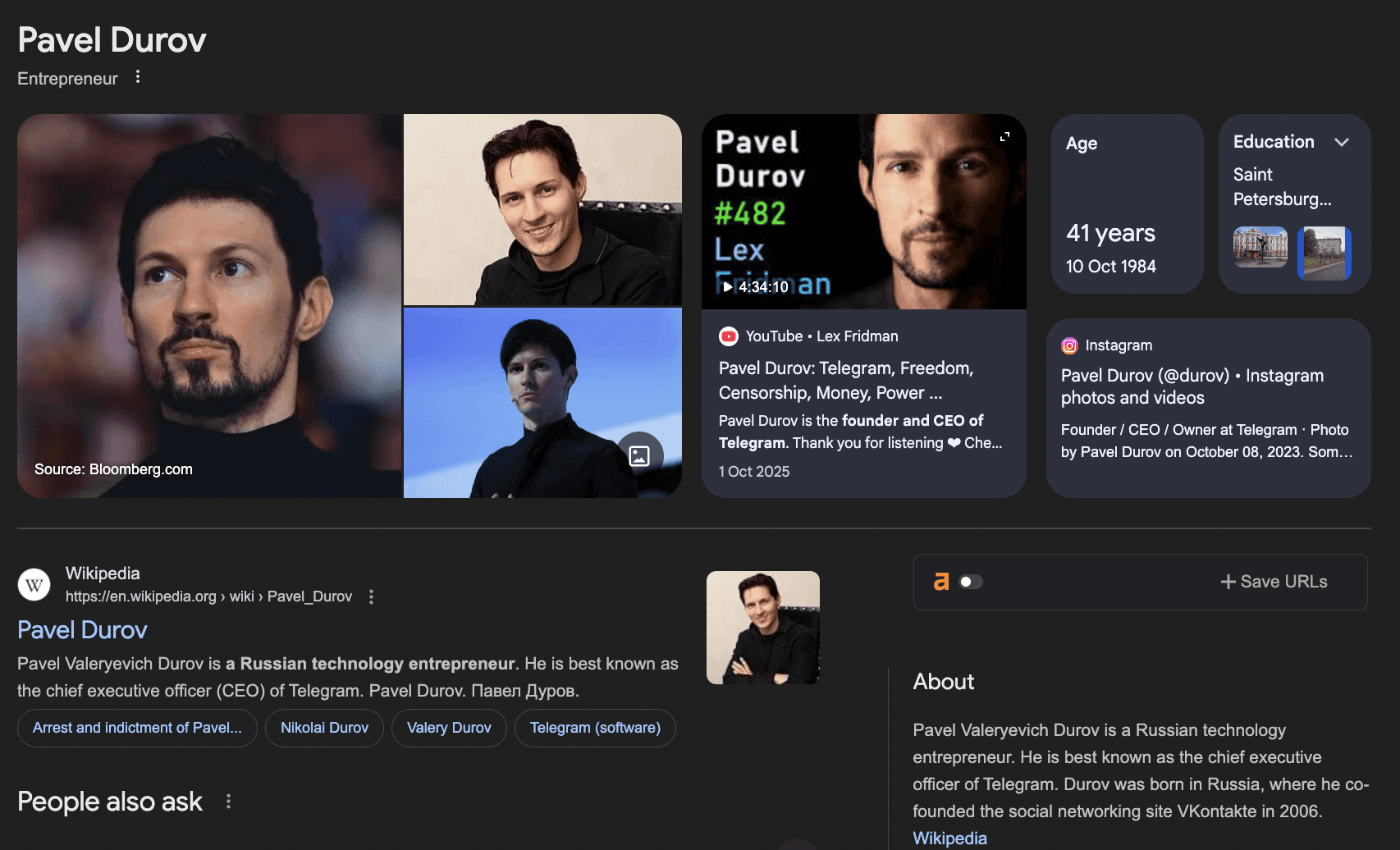
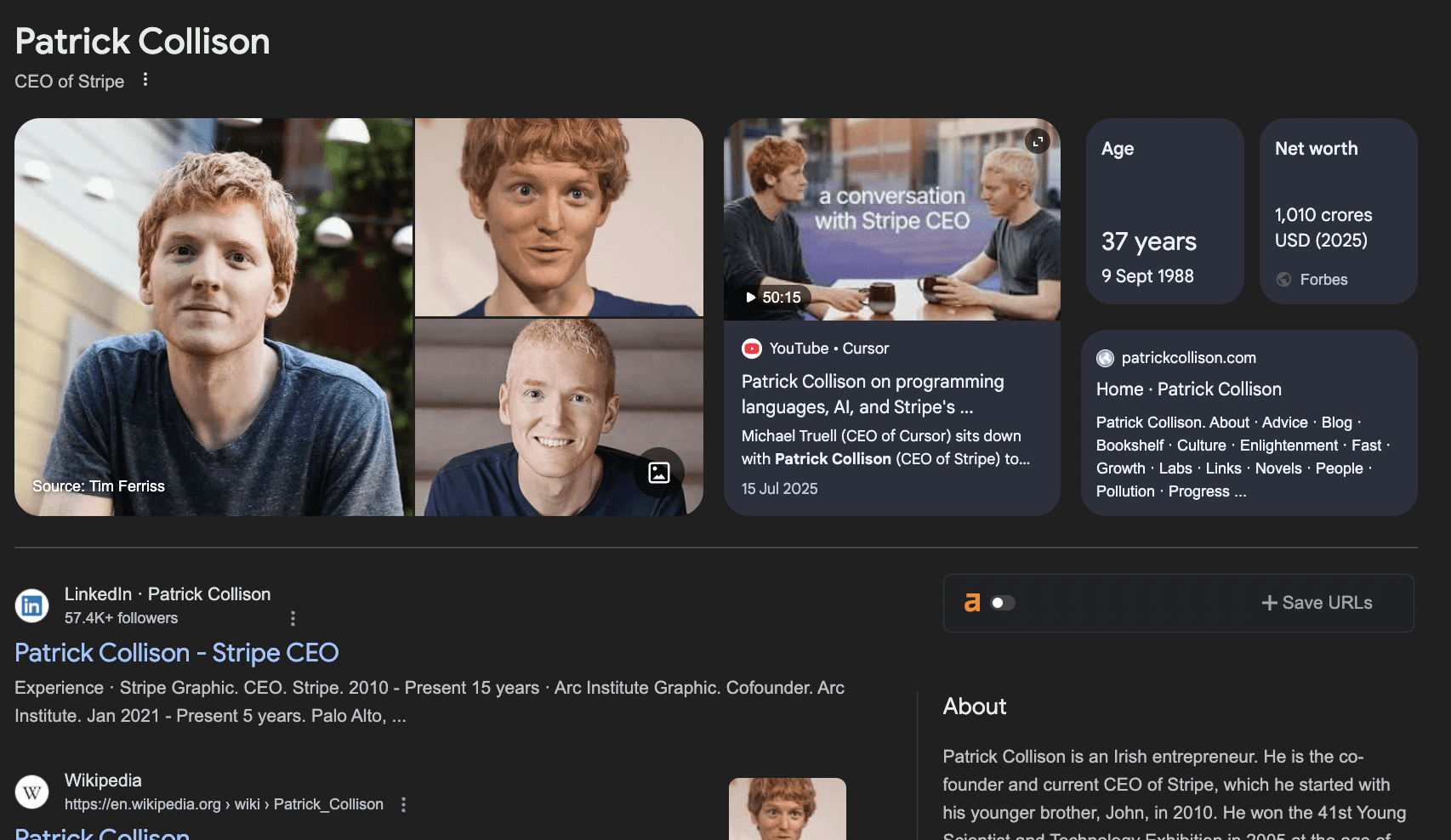
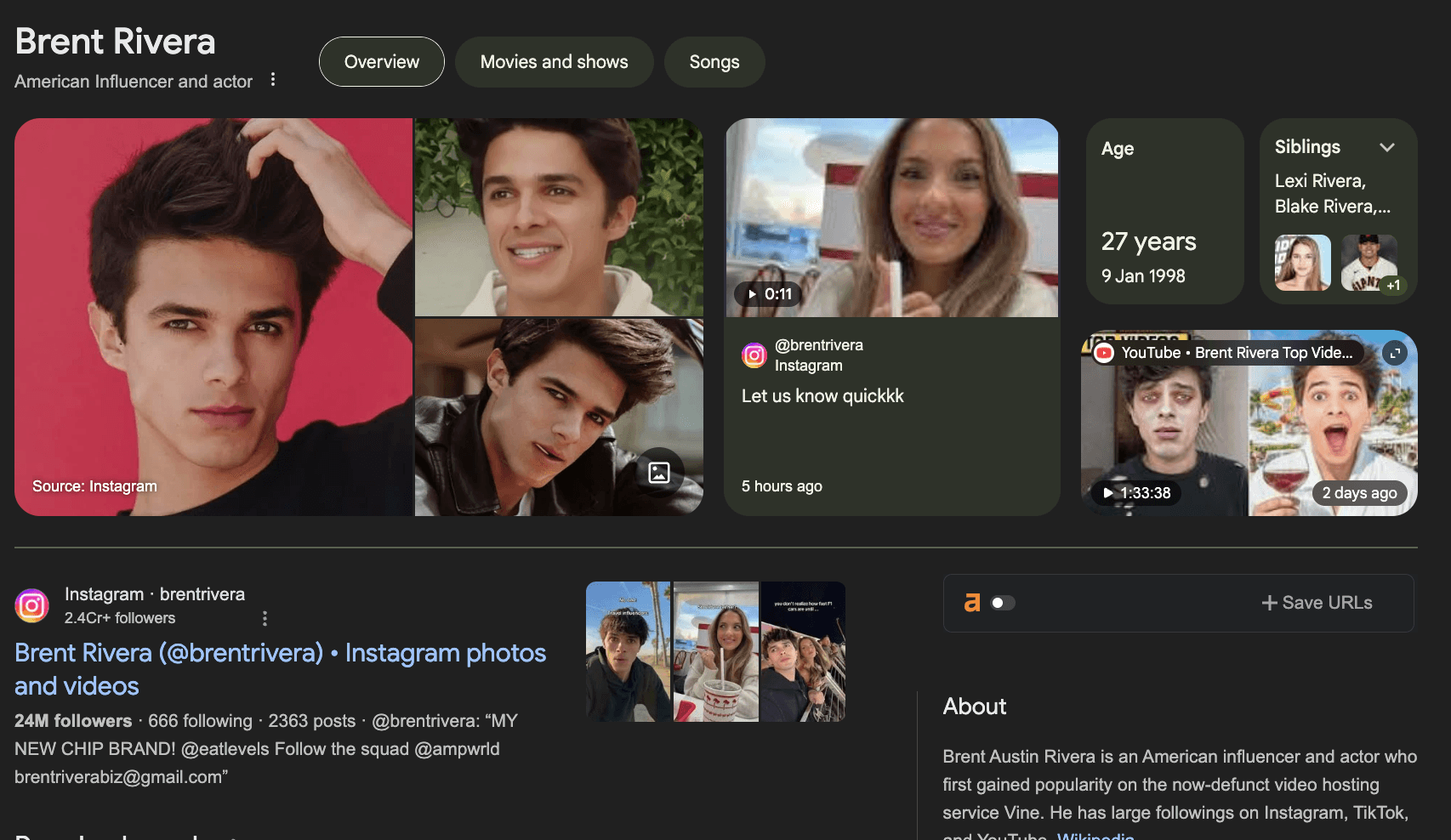
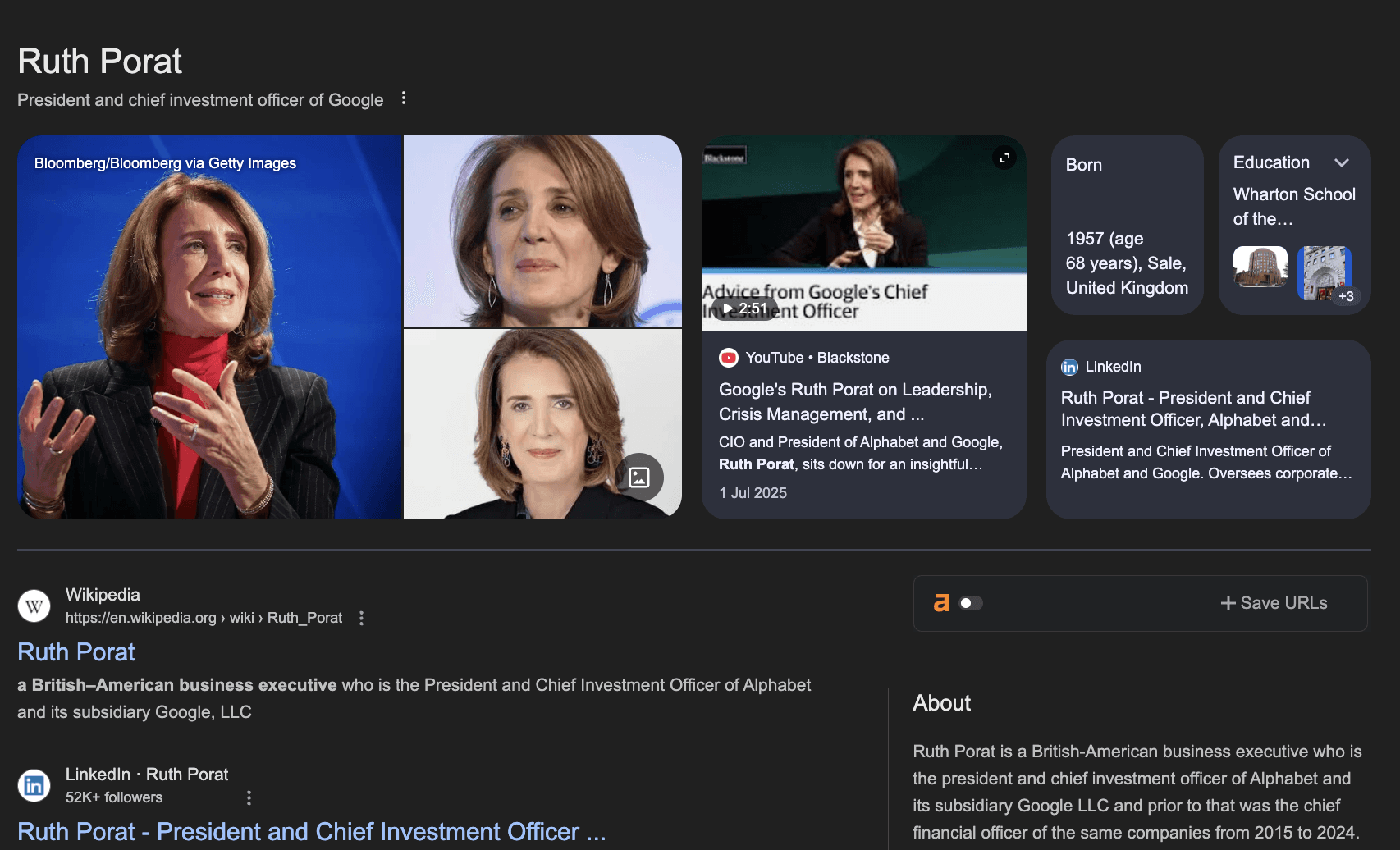
From Google’s side, the question is simple. Are you just a list of links, or have you become a stable entity in its internal map of the world. The strongest visible sign that Google has decided you are an entity is the Google Knowledge Panel. That is the information box that appears to the right of search results on desktop or at the top on mobile. It shows your photo, role, company, a short description, and links that Google recognises as authoritative.
When that panel exists, Google is not simply listing content about you. It is summarising you.
Find out if you are eligible for a Google Knowledge Panel here!
Why that small box matters in real situations
Think about a real sequence you already live.
Your company announces an acquisition. The target company employees want to know who their new leadership is, so they search your name. If they find a clean, consistent panel, they feel like they are joining a stable, professional environment. If they find a mix of random pages and stale information, their anxiety increases.
You enter final conversations for a large strategic partnership. The other side has a risk committee who signs off on counterparties. They Google you. A panel with clear role, organisation, and up to date facts calms internal nervousness before you ever join the room.
A senior candidate you want to hire has to convince their spouse and mentor that your company and leadership are safe to bet their career on. Those people do not have your pitch deck. They have Google. A strong panel makes you feel like a known quantity rather than a question mark.
None of this is theory. It is how humans behave when stakes are high and time is short. They skim the surface of search and draw conclusions. A Knowledge Panel upgrades that surface.
The difference between static PR and a live entity
Traditional executive PR works in bursts. A feature in a magazine, a keynote, a podcast round. You get a spike of attention, then it fades. Google continues to index those assets, but in a shallow way.
When your presence is shaped so that Google can resolve you as an entity, that work compounds. The panel does not replace your corporate site or LinkedIn. It binds them together. It tells search engines and secondary systems that consume Google’s data that you are one person with a coherent story.
As AI systems rely more on knowledge graphs to answer questions about people, that entity layer becomes even more critical. When someone asks an AI about you, it often pulls from the same structured understanding that feeds the Knowledge Panel. In that sense, shaping your panel is shaping how emerging systems will introduce you to the world.
Why many serious executives still do not have one
The uncomfortable truth is that panels do not appear in proportion to seniority or compensation. Some relatively obscure authors and minor entertainers have crisp panels. Many highly compensated, highly trusted executives do not.
The reason is simple. Google does not see your title or your compensation plan. It sees patterns. Consistent naming, aligned profiles, high quality sources, structured data. If those patterns are not present, or if they are split across multiple versions of your name, the system does not feel confident enough to summarise you.
That is why an executive can run billions in assets yet still look like a random LinkedIn profile when someone searches their name. The offline reality and the online representation are out of sync.
Treat your name like a strategic asset
At your level, the question is not whether you can survive without a Knowledge Panel. You clearly can. The question is whether it is wise to leave such a central touchpoint unmanaged.
A well structured panel:
Reduces friction in high trust interactions
Supports your company’s brand by making its leaders look as solid as the organisation claims to be
Signals to media, regulators, and partners that you exist inside a stable, verifiable narrative
You already invest in reputation through IR, corporate communications, ESG reporting, and leadership visibility. Treating your Google presence, and your panel in particular, as part of that stack is simply aligning the external story with the reality you have worked to build.
As an executive, you spend a lot of time thinking about reputation. Investor confidence, talent attraction, regulator comfort, internal morale. Most of that feels very offline and relational. Calls, meetings, board decks, press briefings.
The paradox is that an increasing share of your reputation is now mediated through one tiny interaction that almost nobody talks about. The moment someone types your name into Google.
A board candidate, a journalist, a key hire you want to convince, a regulator who hears your name in a briefing, a family office that gets your deck from a trusted banker. They all end up in the same place. A simple name search. What appears in that moment either reinforces everything you have built, or it quietly undermines it.
What Google currently sees when it looks at you
If you search your own name right now, you will probably see some combination of:
Old conference bios
Scattered interviews
A corporate profile that has not been updated in two years
Outdated news stories from a previous role
Third party directory pages that may or may not be accurate
For most executives, the first page of results feels like a time capsule that nobody is really in charge of. Pieces of your past and present stitched together by algorithms, not by intent.
From Google’s side, the question is simple. Are you just a list of links, or have you become a stable entity in its internal map of the world. The strongest visible sign that Google has decided you are an entity is the Google Knowledge Panel. That is the information box that appears to the right of search results on desktop or at the top on mobile. It shows your photo, role, company, a short description, and links that Google recognises as authoritative.
When that panel exists, Google is not simply listing content about you. It is summarising you.
Find out if you are eligible for a Google Knowledge Panel here!
Why that small box matters in real situations
Think about a real sequence you already live.
Your company announces an acquisition. The target company employees want to know who their new leadership is, so they search your name. If they find a clean, consistent panel, they feel like they are joining a stable, professional environment. If they find a mix of random pages and stale information, their anxiety increases.
You enter final conversations for a large strategic partnership. The other side has a risk committee who signs off on counterparties. They Google you. A panel with clear role, organisation, and up to date facts calms internal nervousness before you ever join the room.
A senior candidate you want to hire has to convince their spouse and mentor that your company and leadership are safe to bet their career on. Those people do not have your pitch deck. They have Google. A strong panel makes you feel like a known quantity rather than a question mark.
None of this is theory. It is how humans behave when stakes are high and time is short. They skim the surface of search and draw conclusions. A Knowledge Panel upgrades that surface.
The difference between static PR and a live entity
Traditional executive PR works in bursts. A feature in a magazine, a keynote, a podcast round. You get a spike of attention, then it fades. Google continues to index those assets, but in a shallow way.
When your presence is shaped so that Google can resolve you as an entity, that work compounds. The panel does not replace your corporate site or LinkedIn. It binds them together. It tells search engines and secondary systems that consume Google’s data that you are one person with a coherent story.
As AI systems rely more on knowledge graphs to answer questions about people, that entity layer becomes even more critical. When someone asks an AI about you, it often pulls from the same structured understanding that feeds the Knowledge Panel. In that sense, shaping your panel is shaping how emerging systems will introduce you to the world.
Why many serious executives still do not have one
The uncomfortable truth is that panels do not appear in proportion to seniority or compensation. Some relatively obscure authors and minor entertainers have crisp panels. Many highly compensated, highly trusted executives do not.
The reason is simple. Google does not see your title or your compensation plan. It sees patterns. Consistent naming, aligned profiles, high quality sources, structured data. If those patterns are not present, or if they are split across multiple versions of your name, the system does not feel confident enough to summarise you.
That is why an executive can run billions in assets yet still look like a random LinkedIn profile when someone searches their name. The offline reality and the online representation are out of sync.
Treat your name like a strategic asset
At your level, the question is not whether you can survive without a Knowledge Panel. You clearly can. The question is whether it is wise to leave such a central touchpoint unmanaged.
A well structured panel:
Reduces friction in high trust interactions
Supports your company’s brand by making its leaders look as solid as the organisation claims to be
Signals to media, regulators, and partners that you exist inside a stable, verifiable narrative
You already invest in reputation through IR, corporate communications, ESG reporting, and leadership visibility. Treating your Google presence, and your panel in particular, as part of that stack is simply aligning the external story with the reality you have worked to build.
As an executive, you spend a lot of time thinking about reputation. Investor confidence, talent attraction, regulator comfort, internal morale. Most of that feels very offline and relational. Calls, meetings, board decks, press briefings.
The paradox is that an increasing share of your reputation is now mediated through one tiny interaction that almost nobody talks about. The moment someone types your name into Google.
A board candidate, a journalist, a key hire you want to convince, a regulator who hears your name in a briefing, a family office that gets your deck from a trusted banker. They all end up in the same place. A simple name search. What appears in that moment either reinforces everything you have built, or it quietly undermines it.
What Google currently sees when it looks at you
If you search your own name right now, you will probably see some combination of:
Old conference bios
Scattered interviews
A corporate profile that has not been updated in two years
Outdated news stories from a previous role
Third party directory pages that may or may not be accurate
For most executives, the first page of results feels like a time capsule that nobody is really in charge of. Pieces of your past and present stitched together by algorithms, not by intent.
From Google’s side, the question is simple. Are you just a list of links, or have you become a stable entity in its internal map of the world. The strongest visible sign that Google has decided you are an entity is the Google Knowledge Panel. That is the information box that appears to the right of search results on desktop or at the top on mobile. It shows your photo, role, company, a short description, and links that Google recognises as authoritative.
When that panel exists, Google is not simply listing content about you. It is summarising you.
Find out if you are eligible for a Google Knowledge Panel here!
Why that small box matters in real situations
Think about a real sequence you already live.
Your company announces an acquisition. The target company employees want to know who their new leadership is, so they search your name. If they find a clean, consistent panel, they feel like they are joining a stable, professional environment. If they find a mix of random pages and stale information, their anxiety increases.
You enter final conversations for a large strategic partnership. The other side has a risk committee who signs off on counterparties. They Google you. A panel with clear role, organisation, and up to date facts calms internal nervousness before you ever join the room.
A senior candidate you want to hire has to convince their spouse and mentor that your company and leadership are safe to bet their career on. Those people do not have your pitch deck. They have Google. A strong panel makes you feel like a known quantity rather than a question mark.
None of this is theory. It is how humans behave when stakes are high and time is short. They skim the surface of search and draw conclusions. A Knowledge Panel upgrades that surface.
The difference between static PR and a live entity
Traditional executive PR works in bursts. A feature in a magazine, a keynote, a podcast round. You get a spike of attention, then it fades. Google continues to index those assets, but in a shallow way.
When your presence is shaped so that Google can resolve you as an entity, that work compounds. The panel does not replace your corporate site or LinkedIn. It binds them together. It tells search engines and secondary systems that consume Google’s data that you are one person with a coherent story.
As AI systems rely more on knowledge graphs to answer questions about people, that entity layer becomes even more critical. When someone asks an AI about you, it often pulls from the same structured understanding that feeds the Knowledge Panel. In that sense, shaping your panel is shaping how emerging systems will introduce you to the world.
Why many serious executives still do not have one
The uncomfortable truth is that panels do not appear in proportion to seniority or compensation. Some relatively obscure authors and minor entertainers have crisp panels. Many highly compensated, highly trusted executives do not.
The reason is simple. Google does not see your title or your compensation plan. It sees patterns. Consistent naming, aligned profiles, high quality sources, structured data. If those patterns are not present, or if they are split across multiple versions of your name, the system does not feel confident enough to summarise you.
That is why an executive can run billions in assets yet still look like a random LinkedIn profile when someone searches their name. The offline reality and the online representation are out of sync.
Treat your name like a strategic asset
At your level, the question is not whether you can survive without a Knowledge Panel. You clearly can. The question is whether it is wise to leave such a central touchpoint unmanaged.
A well structured panel:
Reduces friction in high trust interactions
Supports your company’s brand by making its leaders look as solid as the organisation claims to be
Signals to media, regulators, and partners that you exist inside a stable, verifiable narrative
You already invest in reputation through IR, corporate communications, ESG reporting, and leadership visibility. Treating your Google presence, and your panel in particular, as part of that stack is simply aligning the external story with the reality you have worked to build.


Ready to look like someone who matters?
Turn your Google presence into a polished Knowledge Panel that signals credibility to clients, investors and press before you ever walk in the room.
Ready to look like someone who matters?
Turn your Google presence into a polished Knowledge Panel that signals credibility to clients, investors and press before you ever walk in the room.
Ready to look like someone who matters?
Turn your Google presence into a polished Knowledge Panel that signals credibility to clients, investors and press before you ever walk in the room.
Latest posts
Discover other pieces of writing in our blog